“China Will Always Be a Developing Country”: Beijing and the Global South
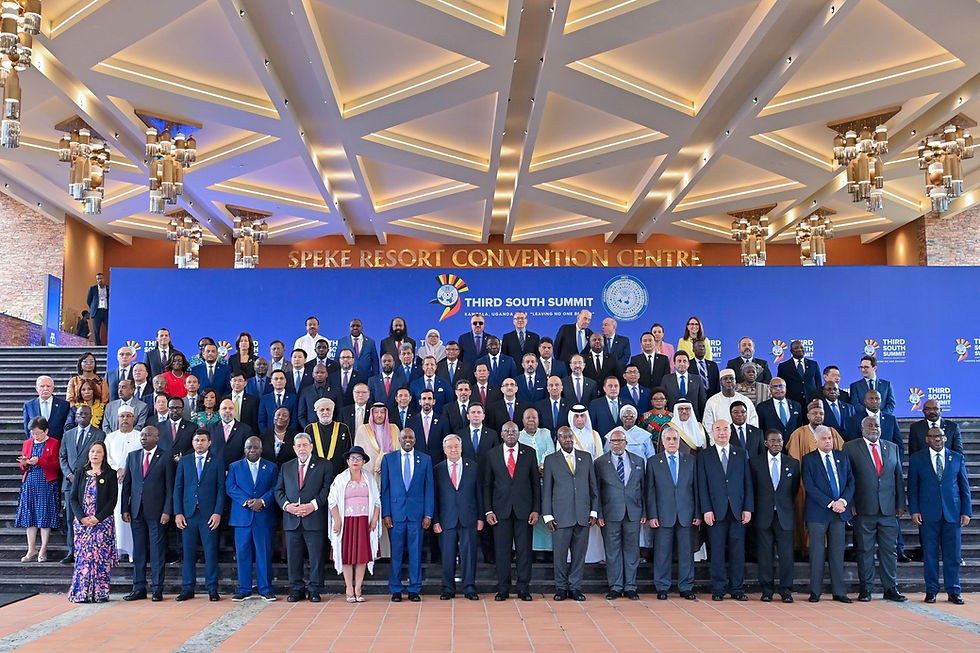
The idea of leading developing nations everywhere towards greater prosperity and autonomy has long been central to PRC foreign policy. But it was not until 2023 that Chinese Foreign Minister Wang Yi first used the term “Global South.” By positioning the PRC as a perpetual member and natural leader of the Global South, Beijing has now crafted a narrative in which China can simultaneously be a developing nation and a great power capable of stalemating the United States. At the same time, Beijing is increasingly turning to the Global South to pursue its foremost political and economic objectives. In the Global South, the PRC is building the foundations of a new world order, finding new markets to absorb the exports that sustain the Chinese economy and securing access to vital commodities, transforming Chinese technology standards into global norms, and pursuing an ambitious program of power projection. Taken together, PRC maneuvers in the Global South may provide a durable advantage in its competition with the United States. At the same time, these efforts have generated stark imbalances in China’s relations with some Global South nations. If Beijing fails to convey to its Global South partners a more serious commitment to reciprocity and common benefit, it might well see this advantage dissipate over time.
“South-South cooperation” has featured prominently in the People’s Republic of China’s (PRC) foreign policy for decades, dating at least to 1983, when Premier Zhao Ziyang addressed the Beijing South-South Conference. The idea of Beijing championing deeper ties among developing and post-colonial nations is older still; Zhou Enlai famously played a prominent role at the 1955 Bandung Conference, which laid the early foundations for the Non-Aligned Movement. Throughout the Cold War, Beijing positioned itself as the leading champion of the “Third World,” providing economic and military aid to newly independent nations and revolutionary movements. Since 1991, Chinese foreign ministers have started each year by visiting partners in Africa, a symbolically powerful reaffirmation of Beijing’s commitment to South-South ties. But it was not until July 2023 that Chinese Foreign Minister Wang Yi first used the term “Global South.” Weeks later, Chinese President Xi Jinping endorsed the concept in remarks delivered on his behalf at the August 2023 BRICS Summit in Johannesburg.
Unlike most of his preferred foreign policy frameworks, Xi cannot claim to have invented the Global South. His embrace of Global South terminology postdated the UN Development Programme’s call to “forge a Global South” by 20 years[1] and India’s inaugural “Voice of Global South Summit” (to which the PRC was not invited) by eight months.[2] Over the course of 2023, India leveraged its G20 presidency to mainstream the Global South concept, and by the end of that year, world leaders were routinely using the term to conjure a coherent and cross-regional community of developing nations bound by solidarity and the post-colonial experience as well as common economic challenges and opportunities. Whereas South-South cooperation called, more modestly, for greater connectivity among developing countries, the idea of the Global South posited a multipolar world in which the nations of the Global South would define the terms of the international order. Even though Xi skipped the 2023 G20 summit in Delhi, most likely due to tensions in Sino-Indian relations, he enthusiastically championed—or perhaps, coopted—this top priority of the Indian presidency.[3]
Beijing conceptualized the Global South—and China’s membership within it—as more of a political construct than an economic one. In his July 2023 remarks, Wang Yi explained, “independence is the defining political feature of the Global South, development and revitalization are the historical mission of the Global South, and fairness and justice are the common proposition of the Global South.” Perhaps in reaction to the PRC’s exclusion from the 2023 Global South summit in Delhi, Wang emphasized, for good measure, “China is naturally a member of the Global South.” In Beijing’s telling, this will remain the case regardless of how much wealth or power China accumulates over time. Its membership is defined, instead, by historical solidarity and a shared vision for the future. As Wang clarified in March 2025, “China is naturally a member of the Global South, because we have fought colonialism and hegemonism together in history, and we are committed to the common goal of development and revitalization.”[4] When the PRC renounced the benefits associated with developing country status in the World Trade Organization (WTO) negotiations in 2025, its representative to the WTO quickly clarified, “China remains a key member of the Global South and will always be a developing country.”[5]
Membership in the Global South is, apparently, a permanent condition. This allows the PRC to resolve a key contradiction in its own self-perception. On the one hand, Beijing increasingly views itself as a great power commensurate to the United States, endeavoring to reshape global governance and influence events around the world. On the other, the PRC cannot abandon its identity as a developing country and recovering victim, fighting back against hegemony and imperialism and helping the rest of the post-colonial world to do the same. Leadership of the Global South provides China with a narrative through which it can more comfortably inhabit these two identities simultaneously, ostensibly wielding its tremendous national power to amplify the voices of developing nations everywhere.
Since 2023, Beijing has often conceptualized its regional diplomacy within the schema of the Global South. When the PRC published its third policy paper on Latin America and the Caribbean (LAC) in December 2025, it positioned the significance of the LAC region primarily as a function of its membership in the Global South. The paper opens, “As a developing country and a member of the Global South, China has always stood in solidarity through thick and thin with the Global South, including Latin America and the Caribbean.” In Xi’s keynote speech at the 2024 Forum on China-Africa Cooperation (FOCAC), he emphasized on three occasions that China-Africa cooperation should catalyze modernization of the Global South broadly.[6] When Wang Yi met the Secretary-General of the Association of Southeast Asian Nations (ASEAN) in Beijing last year, Wang described China and ASEAN as “major forces in the Global South,” arguing the two sides should strengthen cooperation on that basis.[7]
Beijing is now turning to the Global South to pursue its foremost priorities related to foreign policy, economic development, and national security. In the Global South, the PRC is building the foundations of a new world order and institutionalizing absolute deference on its claimed core interests, including Taiwan. It is finding new markets to absorb the exports that sustain the Chinese economy, particularly as these exports face new obstacles in the United States and other developed countries. It is securing access to the commodities that fuel China’s growth while transforming Chinese technology standards into global norms. It is also pursuing an ambitious program of power projection, working to build a network of overseas military installations, dual-use facilities, and space infrastructure. Taken together, PRC maneuvers in the Global South may provide a durable advantage in its competition with the United States, ensuring greater freedom of action and minimizing dependencies vis-à-vis Washington. At the same time, these efforts have generated stark imbalances in China’s relations with some Global South nations. If Beijing fails to convey to its Global South partners a more serious commitment to reciprocity and common benefit, it may see this advantage dissipate over time.
Forging a Community with a Shared Future for Mankind in the Global South
The PRC’s program for the Global South is fundamentally political. It is here that Beijing sees an opportunity to mainstream Xi Jinping’s “Community with a Shared Future for Mankind,” fostering a sense of inevitability regarding China’s leadership in setting the principles and norms that guide international affairs. As Ren Hongyan of the China Institute of International Studies (CIIS), a think-tank administered by the Ministry of Foreign Affairs, asserted in her 2024 piece, “Uniting and Leading the ‘Global South’ to Jointly Advance the Building of a Community with a Shared Future for Mankind,” “The concept of building a community with a shared future for mankind has garnered widespread response and firm support in the ‘Global South.’ […] It has expanded into a consensus within the ‘Global South’ and has become the core concept guiding the ‘Global South’ in advancing the cause of human progress.”[8]
The seriousness with which Beijing looks to the Global South as a political arena can be seen in its focused efforts to secure and amplify endorsement of Xi’s four global initiatives—the Global Development, Security, Civilization, and Governance Initiatives—the normative frameworks through which Beijing has articulated its vision of a new international order. After Xi announced the Global Governance Initiative at the September 2025 Shanghai Cooperation Organization (SCO) summit in Tianjin, PRC readouts of his nine subsequent bilateral meetings highlighted his counterparts’ fervent enthusiasm for the new initiative. Tajik President Emomali Rahmon, for example, reportedly commented: “The Global Governance Initiative put forth by President Xi demonstrates the vision and sense of responsibility of a world-class leader.”[9]
Whereas Xi announced the first of his global initiatives at the UN General Assembly in 2021,[10] he has now turned to fora dominated by members of the Global South for such unveilings, facilitating a more uniformly welcoming reception for new political initiatives and allowing Beijing to claim broad consensus in support of Chinese leadership in its domestic and international propaganda. Yet the Global South is not a monolith, and a perfect consensus continues to elude Beijing. When Xi met then-President of Vietnam Luong Cuong on September 4, 2025, the latter apparently refused to endorse Xi’s expanded claims to global leadership, leaving the PRC Foreign Ministry to characterize only Xi’s side of the conversation in its public readout.[11]
The PRC also looks to the Global South to legitimize its right to handle its claimed "core interests” however Beijing prefers. It positions these interests as internal affairs over which the Chinese government has absolute discretion, regardless of what international law might have to say on the matter or how Chinese policy might affect other nations’ vital interests. PRC officials often identify Taiwan as the foremost of these core interests, but issues related to China’s political system, sovereignty, and territory are not far behind.
When it comes to Taiwan, Beijing has long asked the countries of the Global South to endorse its One China Principle, through which Beijing asserts sovereignty over Taiwan by contending that Taiwan is an integral part of Chinese territory and the PRC is the sole legitimate government of China. But this is no longer sufficient. Beijing has successfully demanded more strident support from its Global South partners, including unqualified endorsement of “reunification,” which implicitly legitimizes Beijing’s right to use non-peaceful means toward this end. It has pressed countries to amplify the PRC view that UNGA Resolution 2758 justifies Taiwan’s exclusion from international organizations, even though the resolution contains no such requirement. In recent years, joint statements published at the end of China’s regional summits—from Africa to Central Asia to Latin America—have all stressed more aggressive positions on Taiwan. Whereas the PRC’s first two LAC policies, released in 2008 and 2016 respectively, already invoked the One China Principle in their framing comments, its third LAC strategy, released in December 2025, presented support for “reunification” as a top priority in China’s program of action for the region, suggesting partners in the LAC region have an obligation to actively advance Beijing’s perspective on the matter.[12]
It remains an awkward reality for the PRC that eleven members of the Global South maintain formal diplomatic relations with Taiwan. Beijing has placed tremendous energy into inducements and coercive measures aimed at “flipping” these countries and fostering an impression that the status quo is untenable. To that end, Beijing has blocked the import of Guatemalan coffee and macadamia nuts, pressured Eswatini’s neighbors to refuse overflight rights when the Taiwanese president attempted a state visit, and promised hundreds of millions of dollars in development assistance to Pacific Island nations willing to make the switch.
International concerns regarding PRC human rights abuses in Xinjiang, Tibet, and Hong Kong have long been construed by Chinese officials as unacceptable attacks on China’s core interests. And it is in the Global South that the PRC seeks to establish an alternative normative framework that marginalizes and delegitimizes such concerns. For example, Beijing leverages its influence in the Global South to generate long lists of signatories for UN statements denying that human rights abuses occur in China, generally in response to joint statements drawing attention to such abuses. The priority Beijing places on this exercise cannot be overstated. In one instance, Beijing reportedly persuaded Ukraine to refrain from signing a Canadian-led UN statement on Xinjiang by threatening to withhold COVID vaccines.[13]
Beijing is also leveraging the respect and dependence it commands across the Global South—and therefore, among the majority of UN member states—to redefine the very concept of human rights, explicitly elevating the “right to development” above civil and political rights. In this paradigm, rights accrue to governments rather than to individuals, and concerns regarding respect for human rights should be addressed exclusively through private dialogue. Beijing champions UN resolutions that foreground the right to development and presses for relevant language to be included in other UN texts, pursues the defunding of UN human rights operations in budgetary negotiations, and places Chinese personnel in key UN roles—often justifying these steps by invoking the supposed benefit to the Global South of elevating development above other rights.
It is worth noting that Beijing typically does not evince strong views about Global South nations’ commitment, or lack thereof, to human rights in their own domestic affairs. The critical question is whether a new government—democratic, authoritarian, or otherwise—is willing to explicitly defer to Beijing on its core interests. For example, Beijing was perfectly content with Myanmar’s ill-fated transition toward democracy, in part because the government of Burmese democracy icon Aung San Suu Kyi swiftly endorsed the One China Principle and backed Beijing in denying the existence of human rights abuses in Xinjiang.
Sustaining Economic Growth through Imbalanced Trade
The PRC is also looking to the Global South to advance its economic objectives. In the 15th Five-Year Plan, approved in March 2026, the Chinese Communist Party doubled down on its export-driven model of growth, aiming to dominate manufacturing across every rung of the value chain. Meanwhile, the most important market for these exports—the United States—has imposed tariffs and other protective measures to limit access for Chinese goods, especially in sensitive industries related to electric vehicles and new energy technologies, areas in which Chinese production is surging. Europe remains comparatively open to these products, but there are significant concerns in Brussels and some national capitals regarding corresponding threats to indigenous industry, and the political foundation for this trading relationship is tenuous. At the same time, structural challenges are weighing heavily on the Chinese economy and so-called “involution” has constrained the profitability of consumer-oriented firms within China. Thus, the importance of Global South markets to Chinese government planners and corporations has grown substantially. As the Global Times emphasized in a March 2026 article, “amid rising protectionism in some advanced economies, growing market demand from the world's developing economies is becoming increasingly important for global trade. […] North-South trade remains important, but a growing body of data reveals greater opportunities within the Global South."[14]
By 2025, China’s global trade surplus hit a record $1.2 trillion—a year-on-year increase of 5.5 percent—and it sold 50 percent more to Global South markets ($1.6 trillion) than to the United States and Western Europe combined ($1 trillion).[15] In that year alone, Chinese exports to Africa rose by 26 percent, with vehicle exports surging by a striking 42 percent in the first three quarters.[16] This represents the acceleration of a longer-running trend; the Harvard University Growth Lab found that exports of Chinese goods to the Global South increased 39-fold between 2000 and 2024.[17]
In many markets, these exports have delivered considerable quality-of-life improvements—particularly in countries lacking a domestic auto industry, where consumers may now be able to afford high-quality electric vehicles from BYD and other Chinese automakers. But when China’s subsidy-supported exports compete with local manufactures, the latter often cannot survive, resulting in rapid, large-scale labor dislocations and complicating Global South nations’ overall development trajectory. In 2024 alone, 2,000 factories closed in Thailand, predominantly due to competition from Chinese imports.[18] In Chile, an influx of Chinese steel selling at prices 40 percent below domestic production costs forced the country’s largest steelmaker, Compañía de Acero del Pacífico’s Huachipato steel plant, to suspend operations, putting thousands of workers out of a job. In response, some Global South governments that otherwise prefer warm and uncomplicated relations with Beijing have taken initial measures to protect their markets, but in most cases these measures will be insufficient to save less competitive domestic industries, and new enterprises may find profitability even more elusive.[19]
At the same time, Beijing relies on the Global South for reliable and diversified access to the commodities that fuel China’s growth—from agricultural products, to critical minerals and rare earths, to energy. The PRC has sustained a boycott on U.S. soybeans and grains by reallocating purchase orders to Brazil and other Latin American markets and by prioritizing the bureaucratic work of ensuring LAC exporters can meet China’s phytosanitary requirements and sell at scale to Chinese buyers. Chinese state-owned enterprises’ control over key mines throughout the Global South has captured widespread attention, particularly in the wake of Beijing’s weaponization of mineral chokepoints in the course of the 2025 trade war. In most cases, Chinese companies send raw ore back to China for refinement—a process that is far more profitable than the mining itself. Indonesia has seen some success in forcing Chinese companies to invest in value-added processing within Indonesia rather than shipping raw nickel directly to China. But other Global South nations have struggled to assert this degree of control over their mineral sales.
When it comes to energy, Beijing’s ties with U.S. adversaries like Iran and Venezuela often garner international scrutiny. But beyond these countries and the hydrocarbon-rich Gulf monarchies, the PRC has also fostered oil and gas imports from Angola and Nigeria, Colombia and Ecuador, Turkmenistan and Papua New Guinea, and many more suppliers across the Global South.[20] On their own, most of these countries cannot meet a significant share of China’s oil or gas requirements, and Russia is still China’s largest supplier. But taken together, the Global South has increasingly provided the answer to Beijing’s drive for energy diversification. As countries around the world navigated the 2026 energy crisis, the United States and Russia both urged China to fill the gap in oil and gas exports from the blockaded Strait of Hormuz with purchases from their own countries. Instead, China turned to the Global South; by April, Brazil had become China’s second largest supplier of oil, while Beijing declined to finalize a pricing agreement for Russia’s Power of Siberia-2 gas pipeline and demurred on U.S. requests entirely during back-to-back summits Xi held with Putin and Trump in May 2026.
Ultimately, Beijing’s economic success in the Global South may have created conditions in which China will start to encounter greater friction in pursuing its commercial and development objectives. Even as economic growth in much of the Global South is still effectively pegged to China’s own growth, China’s economic strategy is starting to preclude the nations of the Global South from advancing beyond their current stage of development. If the PRC is committed to not only moving up the manufacturing value chain but retaining dominance in lower-end production as well; ensuring the viability of this policy by flooding the Global South with subsidized exports with which local industry cannot compete; and prioritizing commodity imports from the Global South that do more to lock these nations into their current level of development than to provide a path toward greater wealth and capability, Global South nations may become less unqualifiedly welcoming of Beijing’s economic offerings. As South African President Cyril Ramaphosa told Xi—in front of the press—in 2024, “We would like to narrow the trade deficit and address the structure of our trade. We urge for more sustainable manufacturing and job-creating investments.”[21]
In some cases, Beijing has acknowledged these tensions. Its 2025 LAC strategy promises to “properly manage trade frictions with LAC countries” and in May 2026, the PRC eliminated tariffs on 53 African countries. But the structural forces created by China’s export-led model of growth, paired with its surging dependence on Global South nations to absorb those exports, will be difficult to overcome through ad-hoc remedial steps.
New Quality Productive Forces and the Global South
Xi Jinping has bet heavily on “new quality productive forces”—in short, technology and innovation—to sustain Chinese growth and elevate its national power. PRC engagement with the Global South is driven by this principle, just as it guides economic policy at home.
Much has been written regarding PRC efforts to promote a broad diffusion of Chinese technologies across the Global South, building a Digital Silk Road that mainstreams Chinese hardware and software in a manner that embeds Chinese influence, surveillance capabilities, and political values into the background noise of global development.[22] At a time when Chinese technology companies are facing stark regulatory obstacles in “Global North” markets as well as cutthroat competition domestically, a strong Global South user base also represents a commercial imperative. When it comes to AI, Beijing has cultivated a narrative in which it is committed to sharing the benefits of this technology with developing nations, while the United States hoards those benefits for itself. For example, soon after the United States tabled the first-ever resolution on AI at the UN General Assembly, China put forward another resolution, “Enhancing International Cooperation on Capacity-Building of Artificial Intelligence,” which highlights the importance of developing nations having equal access to the technology.
Additionally, the Chinese government and Chinese companies have aggressively pursued the transformation of Chinese technology standards into global standards. Success in UN standards bodies depends on support from Global South nations, and the PRC has energetically cultivated that support. But it has also prioritized standard-setting within Global South institutions themselves. In 2025, China established a center for promoting AI development within BRICS, and it hosted a number of standards-focused events in SCO fora. At the 2025 BRICS summit in Rio de Janeiro, the PRC championed a statement on the “Global Governance of Artificial Intelligence,” which notes the BRICS leaders agreed to develop interoperable standards and protocols for the development, deployment, and use of AI.[23] At the 2025 BRICS Forum on Partnership on New Industrial Revolution 2026 in Xiamen, China Mobile Chairman Yang Jie emphasized, “We will deepen cooperation with BRICS counterparts in promoting international alignment of AI and 6G standards, and building interconnected infrastructure to strengthen the digital backbone of BRICS countries.”[24] Beijing has been even more active bilaterally; in 2025 alone, it claimed to have signed 130 standards cooperation agreements with 75 countries and international organizations.[25]
The soft power benefits of Chinese technology’s ubiquity have been immense. Global South publics increasingly equate China with an optimistic, futuristic vision of modernity. In Argentina, Indonesia, Mexico, and South Africa, polling shows greater support for PRC regulation of artificial intelligence rather than for U.S. regulation.[26] In 2023, Pew Research found that 85 percent of Nigerians viewed China’s technological achievements as the best or above average when compared to other wealthy nations. Over 70 percent of Kenyans, South Africans, and Argentinians agreed.[27] Even in Europe, key U.S. allies now believe China is more technologically advanced than the United States.[28]
Power Projection
In the Global South, Beijing has also sought to expand the harder edge of its power, working to establish a network of overseas military bases and dual-use facilities, including space infrastructure. In comparison to the speed with which Beijing secured enduring inroads in political, economic, and technological domains across the Global South, it has faced considerable challenges in instituting more traditional forms of power projection. After opening its first overseas military base in Djibouti in 2017, Beijing launched what appeared to be a coordinated global effort to build further military facilities, focusing on key naval passages adjacent to Equatorial Guinea, Gabon, Pakistan, the Solomon Islands, Tanzania, the United Arab Emirates (UAE), and elsewhere.[29] Facilities in Equatorial Guinea or Gabon could have enabled a more regular PLA presence in the Atlantic Ocean, whereas the UAE base would have provided Chinese forces greater influence over a critical energy chokepoint, while creating new opportunities to gather intelligence on U.S. military deployments in the Middle East.
Yet nearly ten years after the PLA launched its Djibouti facility, it has managed to establish only one additional naval station beyond China’s borders: the China-Cambodia Ream Naval Base Joint Support and Training Center.[30] Focused pushback from the United States, paired in some cases with domestic instability or discomfort from neighbors, appears to have doomed or delayed China’s many other reported basing projects. Meanwhile, Beijing and Phnom Penh have gone to great lengths to deny the Cambodian facility’s increasingly obvious status as a PLA base, and the PRC has joined with prospective hosts in denying plans for bases elsewhere as well. Whereas Global South countries are generally proud to champion their growing partnerships with China, and most will readily offer enthusiastic support for China’s mounting power on the world stage, this support apparently does not extend to more formal (or perhaps more American-inflected) forms of power projection. Notably, Beijing has seen far more success in expanding its partnerships with internal security services and law enforcement agencies across the Global South, as documented by the Carnegie Endowment for International Peace, and PRC companies’ control of civilian ports at dozens of key waterways across the Global South could easily be leveraged for military purposes in wartime.[31]
Beijing has also achieved substantial progress in building dual-use space infrastructure throughout the Global South, especially at geographic points that would enable the PLA to communicate with its satellite architecture in real-time during a conflict. As with the military facilities, the value of these ground stations and space object-tracking capabilities depends on China’s ability to build them at specific locations controlled by Global South nations. Unlike military facilities, they are ostensibly scientific in nature, with civilian entities typically taking the lead in bilateral arrangements. Under the mantle of scientific cooperation, China has established ground stations, radio antennae, and advanced telescopes from Egypt to Bolivia to Thailand, and in many other countries across the Global South.[32] More controversially, Argentina allowed China Satellite Launch and Tracking Control General (which reported to the PLA Strategic Support Force prior to that organization’s 2024 dissolution) to establish a deep space observation station in Neuquén.[33] U.S. pressure is now complicating Beijing’s attempts to continue expanding this network, especially in the Western Hemisphere; in 2025 the Argentinian and Chilean governments canceled separate projects through which the PRC would have operated major astronomical observation facilities in the Andean desert.[34] But the PRC has already built a diversified global network of space-related sites, and the United States may struggle to systematically degrade these capabilities.
Great Changes Unseen in a Century
Taken together, China’s energetic efforts to advance its political, economic, technological, and strategic objectives in the Global South have significantly strengthened Beijing’s ability to pursue its foremost foreign policy priority—preventing the United States from interfering with China’s rise. As Jonathan Czin, Allie Matthias, Michael Swaine, and others have argued persuasively in these pages, Xi Jinping views the United States as a declining but dangerous power. Xi may believe time is on China’s side, but he does not take for granted that “great changes unseen in a century” will unfold on China’s terms.
In the Global South, Beijing has found opportunities to lessen its vulnerabilities vis-à-vis Washington, breaking its food industry’s reliance on U.S. agricultural products and its exporters’ dependence on U.S. consumers, strengthening its position in the AI race, and mitigating Washington’s advantage in space and telemetry. At the same time, Beijing has deepened U.S. dependence on China, dominating critical mineral and rare earth supply chains. It has contested the United States’ ability to define international norms, rewriting these rules and conventions on China’s terms when it comes to Taiwan, human rights, and the fundamental architecture of interstate relations. And it has crafted a narrative for its own identity in which China can simultaneously be a developing nation and a great power capable of stalemating the United States. Returning to Ren Hongyan’s 2024 CIIS paper: “In the face of a new landscape marked by intensifying geopolitical rivalry, sluggish global economic recovery, and a constant stream of global challenges, uniting with the ‘Global South’ is also an inevitable requirement for China to maintain strategic initiative and sustain its development momentum.”
Yet China’s perpetual success in the Global South is not assured. The Asia Society found that the ratio of positive to negative views about China is already narrowing across the Global South, from 2.3:1 before 2020, to 1.7:1 during the 2020s.[35] In the gap between the PRC’s claims to lead the Global South toward greater prosperity and the policy moves that defend China’s own development by erasing opportunities in other countries, real frustration has emerged in some corners of the Global South. Additionally, developing nations have evinced discomfort with Beijing’s harder-edged military ambitions. It will be difficult for the PRC to meaningfully address these concerns without revisiting core assumptions regarding its model of economic growth and its geopolitical ambitions. The Trump administration’s explicit disregard for developing nations may mask these tensions for the time being as public and elite opinion toward China will naturally benefit from current U.S. policy. But this will not solve the problem for the PRC over the longer term. Notwithstanding its intense focus on the Global South, it is unclear whether Beijing will be willing to make the hard decisions required to put its relations with developing countries on a more sustainable and mutually beneficial footing.
About the Contributor
Henrietta Levin is a Senior Fellow with the Center for Strategic and International Studies. She previously held senior positions at the U.S. Department of State and the National Security Council.
Notes
[1] https://catalogue.nla.gov.au/catalog/1097170
[2] https://in.boell.org/en/2025/10/07/global-south-search-leadership-chinese-perspective
[3] https://www.reuters.com/world/xi-skipping-g20-summit-seen-new-setback-india-china-ties-2023-09-05/
[4] https://www.fmprc.gov.cn/eng./wjbzhd/202503/t20250307_11570138.html
[5] https://www.reuters.com/world/china-says-it-wont-change-developing-country-status-will-forgo-benefits-2025-09-24
[6] https://english.www.gov.cn/news/202409/05/content_WS66d964bdc6d0868f4e8eaa07.html
[7] https://www.mfa.gov.cn/eng/wjbzhd/202507/t20250726_11677843.html
[8] https://www.qstheory.cn/20241227/6b7aa612269942d5b485edc91b9e3968/c.html
[9] https://www.fmprc.gov.cn/eng/xw/zyxw/202509/t20250902_11700828.html
[10] https://en.chinadiplomacy.org.cn/gdi/index.shtml
[11] https://www.fmprc.gov.cn/eng/xw/zyxw/202509/t20250904_11702133.html
[12] For more on Taiwan’s relevance to the Global South, see https://www.csis.org/analysis/understanding-global-south-perspectives-taiwan
[13] https://jamestown.org/un-human-rights-clash-strains-credibility-of-chinese-diplomacy/
[14] https://www.globaltimes.cn/page/202603/1356611.shtml
[15] https://www.spglobal.com/en/research-insights/special-reports/china-inc-heads-to-global-south-in-the-age-of-tariffs
[16] https://www.nytimes.com/interactive/2025/11/03/world/asia/china-exports-trump-tariffs.html
[17] https://itif.org/publications/2026/04/06/global-trade-battleground-us-china-competition-in-the-global-south/
[18] https://asiasociety.org/policy-institute/chinas-overcapacity-may-become-southeast-asia-problem-if-trumps-tariffs-materialise
[19] https://www.reuters.com/markets/asia/thailand-posts-20-drop-low-quality-chinese-imports-official-says-2024-12-09/
[20] https://comtradeplus.un.org/
[21] https://www.reuters.com/world/chinas-xi-met-south-africas-ramaphosa-beijing-state-media-say-2024-09-02/
[22] For an analysis of China’s Digital Silk Road, see https://www.cnas.org/publications/reports/countering-the-digital-silk-road
[23] http://www.brics.utoronto.ca/docs/250706-ai.html
[24] https://global.chinadaily.com.cn/a/202509/17/WS68c9e9daa3108622abca11c3.html
[25] http://english.scio.gov.cn/pressroom/2026-02/06/content_118320965.html
[26] https://www.pewresearch.org/global/2025/10/15/trust-in-the-eu-u-s-and-china-to-regulate-use-of-ai/
[27] https://www.pewresearch.org/global/2023/07/27/chinese-soft-power/
[28] https://www.politico.com/news/2026/03/15/trump-china-europe-closer-ties-00823457
[29] https://breakingdefense.com/2024/07/chinas-newest-military-base-is-up-and-running-and-us-officials-see-more-of-them-on-the-horizon/
[30] https://amti.csis.org/first-among-piers-chinese-ships-settle-in-at-cambodias-ream/
[31] https://carnegieendowment.org/research/2025/08/a-new-world-cop-on-the-beat-chinas-internal-security-outreach-under-the-global-security-initiative
[32] https://features.csis.org/hiddenreach/china-space-diplomacy-global-south/
[33] https://www.lowyinstitute.org/the-interpreter/gravity-china-s-space-base-argentina
[34] https://www.nytimes.com/2026/05/10/world/americas/us-china-telescope-argentina-chile.html
[35] https://asiasociety.org/policy-institute/views-china-across-global-south-rule-and-exceptions
Photo credit: The President's Office of the Republic of Maldives, CC BY 4.0 <https://creativecommons.org/licenses/by/4.0>, via Wikimedia Commons


